
UK Cannabis Law 2026: Current Rules, Medical Access and What Could Change
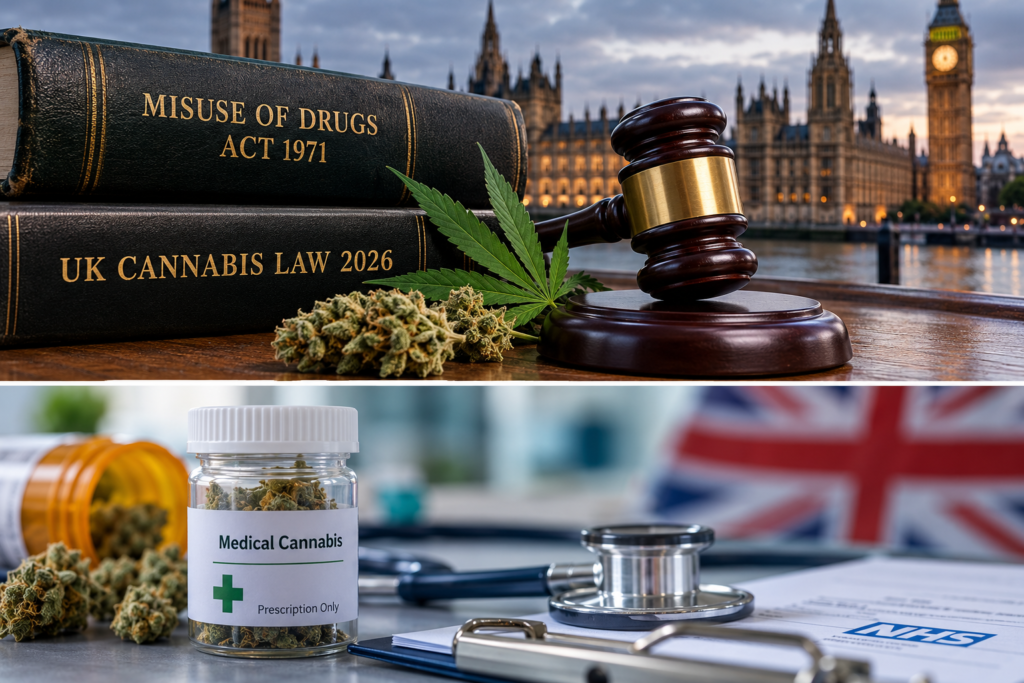
UK cannabis law 2026 remains an important topic for readers following British drug policy, medical cannabis access and possible regulatory developments. Cannabis remains a Class B controlled drug under the Misuse of Drugs Act 1971, while cannabis-based products can be prescribed for medicinal use in specific circumstances. As of October 2026, the government has stated that it has no plans to change the law on recreational cannabis.
This guide explains UK cannabis law 2026, the current rules on possession and supply, how medical prescriptions work, and what the latest review by the Advisory Council on the Misuse of Drugs (ACMD) could mean. DANK DISTRICT aims to provide clear, sourced information without confusing proposed reforms with changes that have actually become law.

What Is the Current UK Cannabis Law in 2026?
The starting point for understanding UK cannabis law 2026 is the Misuse of Drugs Act 1971. Cannabis is classified as a Class B drug. Recreational possession, supply and production are criminal offences, subject to the relevant legislation and circumstances.
The government reiterated in a parliamentary response dated 10 September 2026 that it had no plans to change the law on cannabis legalisation or decriminalisation. This means readers should not assume that news coverage, public debate or a policy recommendation has made recreational cannabis legal.
For the latest legal wording, consult the official Misuse of Drugs Regulations 2001 alongside the Misuse of Drugs Act 1971. These legal instruments should be read together where relevant.
Is cannabis legal in the UK?
No. Recreational cannabis is not legal in the UK. The rules cover possession and activities such as supplying and producing cannabis. The consequences depend on the offence, evidence, circumstances and applicable law.
When researching UK cannabis law 2026, it is important to distinguish the criminal law governing recreational cannabis from the rules allowing certain cannabis-based medicines to be prescribed.
What are the penalties for cannabis offences?
Cannabis is a Class B drug. The maximum penalties provided for Class B offences include up to five years’ imprisonment for possession and up to 14 years for supply or production, alongside an unlimited fine or both where applicable.
These are maximum penalties, not automatic sentences for every case. Anyone facing a cannabis-related criminal allegation should seek independent legal advice rather than relying on a general online article.
Medical Cannabis Access Under UK Cannabis Law 2026
One of the most significant developments in UK cannabis law 2026 is the continued debate over access to cannabis-based products for medicinal use. Since November 2018, eligible products have been legally prescribable under a restricted framework.
However, medical cannabis is not an unrestricted alternative to recreational cannabis. The rules depend on the product, prescription requirements and clinical circumstances. Many cannabis-based products for medicinal use are unlicensed medicines.
According to the General Medical Council, unlicensed cannabis-based products for medicinal use must be prescribed by a doctor on the GMC Specialist Register under the relevant framework.
Can a GP prescribe medical cannabis?
In general, an ordinary GP cannot independently initiate an unlicensed cannabis-based medicinal product prescription under the specialist prescribing framework. Prescribing is restricted to appropriately qualified specialist doctors, who must assess whether the treatment is clinically appropriate.
NHS prescriptions remain limited, and eligibility depends on the medicine and clinical circumstances. Readers should consult the NHS medical cannabis guidance for an explanation of current access arrangements and the conditions for which certain products may be considered.
Is medical cannabis available privately?
Private specialist clinics may prescribe cannabis-based medicinal products where the legal and clinical requirements are met. A private consultation does not guarantee a prescription, and patients should check the clinician’s credentials, costs, follow-up arrangements and the status of the proposed medicine.
This distinction matters when following UK cannabis law 2026: legal medical prescribing does not create a general right to buy, possess or grow recreational cannabis.
The ACMD Review: What Could Change?
A major current story connected with UK cannabis law 2026 is the review of the medical cannabis framework by the Advisory Council on the Misuse of Drugs.
The review examines the impact of the 2018 changes, including whether the framework achieved its intended objectives, what unintended consequences have emerged and whether recommendations could improve the system.
In September 2026, industry reporting said the ACMD expected to publish its report by the end of the year. That is a reported target, not confirmation that the report has already been published.
Will the ACMD review legalise cannabis?
No automatic legal change follows from an ACMD review. The council provides expert advice and recommendations; decisions about whether to implement recommendations rest with the government and the relevant legal process.
The review concerns cannabis-based products for medicinal use. It should not be described as a confirmed plan to legalise recreational cannabis.
Anyone tracking UK cannabis law 2026 should check the publication of the final report and any subsequent official government response before reporting a change in policy.
Could Recreational Cannabis Become Legal in 2026?
Public discussion about reform continues, but discussion is not legislation. The government stated in September 2026 that it had no plans to change the law on recreational cannabis.
For that reason, responsible coverage of UK cannabis law 2026 should separate three things:
- Current law: the rules presently in force.
- Recommendations: proposals made by advisers, commissions or campaign groups.
- Government action: an official decision followed by any required legal or legislative steps.
A news headline suggesting that cannabis laws “could change” does not establish that legalisation is imminent. DANK DISTRICT will distinguish confirmed changes from possible future developments so readers can understand what has actually happened.
What UK Cannabis Law 2026 Means for Consumers and Businesses
The rules are relevant not only to individuals but also to retailers, publishers and businesses discussing cannabis-related products. Different product categories can be governed by different legal frameworks, including controlled-drug legislation, medicines rules and food regulations.
A product being advertised online does not prove that it is lawful to possess or supply. Likewise, a product described as CBD should not automatically be assumed to meet every applicable requirement.
DANK DISTRICT readers can explore the site’s cannabis flower category, concentrates category, live rosin category, 510-thread vape cartridges and Puffco category. These links are provided for site navigation; their presence does not establish the legal status of any individual product or transaction.
For businesses, checking the rules that apply to each specific product is more reliable than assuming that a single cannabis rule covers everything.

How to Follow UK Cannabis Law 2026 Developments
Readers following UK cannabis law 2026 should prioritise official announcements and primary legal sources. The most useful developments to monitor include:
- Publication of the ACMD’s medical cannabis review.
- The government’s formal response to any recommendations.
- Changes to legislation or official prescribing guidance.
- New guidance from healthcare regulators concerning cannabis-based medicines.
- Parliamentary statements that clarify whether the government’s position has changed.
For a reliable starting point, visit the government’s medicinal cannabis information and resources. Check publication dates and read the original announcement rather than relying solely on social media summaries.
Frequently Asked Questions
Is cannabis legal in the UK in 2026?
No. Recreational cannabis remains a Class B controlled drug. Certain cannabis-based medicines can be prescribed under the applicable medical framework.
Has the UK legalised recreational cannabis?
No. The government stated in September 2026 that it had no plans to change the law on recreational cannabis.
What is the ACMD reviewing?
The ACMD is reviewing the impact of the 2018 changes governing cannabis-based products for medicinal use. Its work includes assessing outcomes, unintended consequences and possible recommendations.
Will medical cannabis rules change before the end of 2026?
The ACMD has reportedly targeted the end of 2026 for publication of its review. Whether any recommendations lead to changes depends on subsequent government decisions and any necessary legal steps.
Can someone grow cannabis at home in the UK?
There is no general legal allowance for recreational home cultivation. Growing cannabis can constitute a criminal offence unless a relevant legal authorisation applies.
Where can I find reliable information about UK cannabis law?
Start with GOV.UK, the NHS, the General Medical Council and the legislation published on legislation.gov.uk. For legal advice about an individual situation, consult a qualified solicitor.
Conclusion: UK Cannabis Law 2026
UK cannabis law 2026 continues to distinguish recreational cannabis offences from the restricted legal prescribing of cannabis-based medicines. Understanding that distinction is essential for anyone following policy, healthcare access or cannabis-related business developments.
The main current issue is the ACMD review of the medical cannabis framework, which was reported in September 2026 as expected by the end of the year. The review may inform future decisions, but it is not itself a change in the law.
DANK DISTRICT will continue covering UK cannabis law 2026 through evidence-based updates, with links to official sources and clear explanations of confirmed developments. Readers should check current legislation and government guidance before making decisions based on legal information.
Editorial disclaimer: This article is for general information only. It is not legal or medical advice. Laws and guidance may change; consult official sources or a qualified professional for advice about a specific situation.