
Italy Student Protests: How Rising Rent Is Making University Life Harder
For many university students, getting into higher education is only the beginning of the challenge. Finding somewhere affordable to live, paying for food and transport, buying course materials and covering everyday bills can make studying increasingly difficult. In Italy, these pressures have become a visible focus of student protests during October 2026.
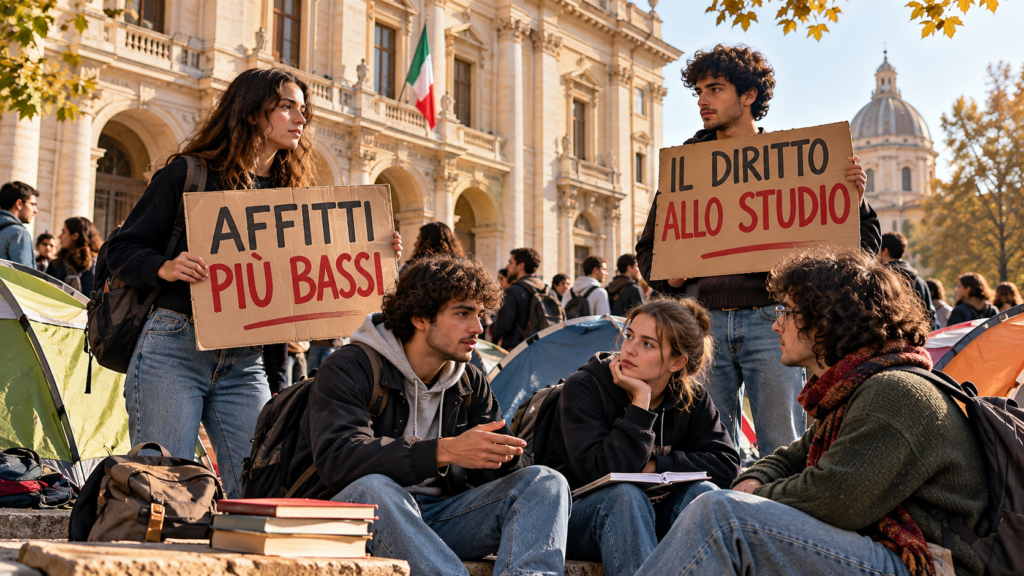
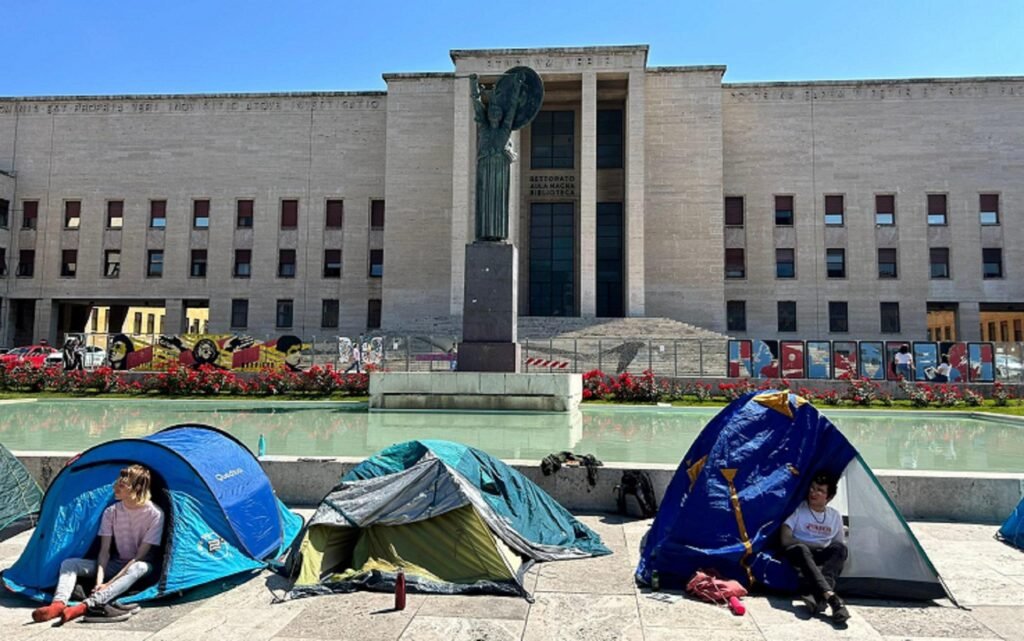
Students have set up tents outside universities and in public spaces in Rome, Milan, Naples and other cities. Their demonstrations highlight rising accommodation costs, shortages of affordable student housing, the cost of living and concerns about whether public investment is making university education accessible to everyone.
The Italy student protests are part of a wider debate about the relationship between housing, education and social mobility. Student organisations argue that the ability to attend university should not depend on whether a family can afford expensive rent in a major city.
This article examines why students are protesting, how housing costs affect university life, what demonstrators are asking the government to do and what could happen next.
What Is Behind the Italy Student Protests?
The current mobilisation became particularly visible in October, when the Union of University Students (Unione degli Universitari, or UDU) launched a national campaign under the slogan “Cara Italia, quanto ci costi?” — “Dear Italy, how much do you cost us?”
On 12 October, students set up tents in Rome’s Piazza Montecitorio, near Parliament, and outside universities in several cities. The action was intended to draw attention to the rising cost of university life and what organisers describe as failures in housing policy and student support. The demonstrations continued in the following days, including protests at Rome’s Sapienza University and the University of Naples Federico II. ANSA reported on the national mobilisation and its demands.
The protests are not limited to one university or one city. Their shared theme is the growing difficulty of paying for accommodation and other essentials while studying.
Why tents have become a symbol
Tents make the housing issue visible. Instead of simply holding a march, students are occupying public spaces to demonstrate what they say is a lack of affordable accommodation.
The symbolism is direct: if students cannot afford a room near their university, they may struggle to attend classes, complete assignments or remain enrolled. A temporary campsite outside Parliament also creates a visible reminder that housing is connected to the right to education.
The protests do not mean that every Italian student is homeless or faces the same financial pressures. They show that student organisations consider housing affordability and the availability of suitable accommodation serious enough to warrant a national campaign.
1. Rising Rents Are Putting Pressure on Students
Rent is often one of the largest expenses for students who move away from their family home to attend university. In cities with strong demand for accommodation, students may compete with workers, tourists and other renters for a limited number of rooms.
When rents rise faster than a student’s available income or financial support, the consequences can extend beyond having less spending money. Students may need to share rooms, live farther from campus, work longer hours or reconsider whether they can afford to study in a particular city.
The cost of a room can shape university choices
A university place may be academically suitable but financially unrealistic if accommodation nearby is unaffordable. Students from families with limited resources can face a different set of choices from those whose parents can cover rent and living expenses.
Some may choose a university closer to home, even if another institution better suits their academic interests. Others may commute long distances or take on paid work alongside their studies.
These decisions can affect time, concentration and access to university activities. A student who spends hours commuting or working extra shifts has less time available for lectures, revision and rest.
Why the housing shortage matters
Student accommodation is not simply about the total number of beds in a city. Price, location, quality, contract terms and eligibility also determine whether housing is genuinely accessible.
A newly built residence may add capacity without meeting the needs of students on limited budgets if its rooms remain too expensive. Students protesting in Italy have criticised projects they believe prioritise private returns over affordable accommodation.
The policy challenge is therefore to expand suitable housing while ensuring that the people who need it most can afford to use it.
2. Housing Costs Can Become an Education Barrier
The central message of the protests is that accommodation costs can undermine access to higher education. A student may qualify academically for university but still struggle to meet the costs associated with attending.
The difference between tuition and the total cost of studying
Tuition fees are only one part of a student’s budget. Rent, utilities, food, transport, textbooks, internet access and other essential expenses can add substantially to the total.
A policy that makes tuition more affordable may not solve the wider problem if students cannot find a reasonably priced place to live. Similarly, a scholarship may not cover enough of the cost of living in a high-rent city.
This is why demonstrators have connected housing policy with the broader right to education. They argue that formal access to a university is not enough if the practical cost of attending makes it inaccessible to students from lower-income households.
Who is most exposed to these pressures?
Students who move away from home are particularly exposed to rental costs. Those without family financial support, those studying far from their home region and international students may face additional challenges, depending on their circumstances and eligibility for assistance.
However, the impact varies. Students may have access to scholarships, family support, subsidised housing or other forms of assistance. The important question is whether the support available is sufficient for the student’s actual living costs.
3. Why Students Are Criticising Housing Policy
Student organisations argue that housing support has not kept pace with the needs of university populations in major cities. They have called for more affordable accommodation, public investment and measures to prevent housing costs from turning higher education into a privilege.
ANSA’s October coverage reported that organisers criticised the cost of student life, the housing situation and the role of private operators in student accommodation. These are the organisers’ claims and demands; they should be distinguished from independently established findings about every housing project or public investment programme. Read ANSA’s report on the tent protests.
Public investment and affordable student residences
Public investment can help expand student housing, but its impact depends on how projects are designed and operated. Relevant questions include how many rooms are created, when they become available, what they cost and whether students with limited incomes can access them.
Students want policies that produce accommodation they can actually afford, rather than capacity that exists on paper but remains beyond their budgets.
The role of private accommodation providers
Private landlords and operators can provide housing and invest in new residences. The concern raised by protesters is that market-led provision may not meet the needs of students who cannot pay higher rents.
This creates a policy question rather than a simple choice between public and private housing. Governments can consider different approaches, including public residences, targeted housing support, affordable-rent requirements and partnerships with private providers that include clear affordability conditions.
The effectiveness of any approach depends on its design, funding, implementation and long-term maintenance.
4. Student Poverty Goes Beyond Rent
The Italy student protests also reflect the wider cost of university life. Even students who find accommodation may struggle with food, transport, energy bills, study materials and other essentials.
When several expenses increase together, a student can run out of money before the end of the month. This may mean skipping social activities, reducing food spending, taking extra shifts or relying on family members who may themselves be under financial pressure.
Working while studying
Part-time employment can help students meet their expenses and develop useful experience. But long or unpredictable working hours can conflict with lectures, assignments and exam preparation.
Students who must work many hours to afford rent may have less time to study than peers who receive greater financial support. This can create unequal conditions even when both students attend the same university.
Food, transport and study materials
The cost of meals, commuting and textbooks can also affect whether students can participate fully in university life. A room at a lower price may still be expensive overall if it is far from campus and requires substantial transport spending.
A useful student-support policy therefore needs to consider the total cost of living and studying, not accommodation alone.
5. What Are Italian Students Asking the Government to Do?
The October mobilisation has centred on housing affordability, the cost of university life and stronger protection for the right to education. The precise proposals differ between organisations, but reported demands include greater investment in public student accommodation and support that makes studying more financially realistic.
Student organisations have also criticised what they see as insufficient public support and the treatment of student housing as an investment opportunity rather than an essential part of education.
Their demands should not be confused with policies already adopted by the government. A protest statement expresses what organisers want; a formal government commitment, an approved budget and a completed housing project are separate stages.
More affordable student accommodation
Students want a greater supply of rooms at prices that match realistic student budgets. This could involve expanding public residences, improving existing facilities or attaching affordability requirements to publicly supported projects.
New accommodation needs to be delivered where students can use it. Location, transport access, room quality and the timing of construction all influence whether a project solves an immediate problem.
Stronger financial support
Housing is only one part of the problem. Students may also need financial assistance that reflects actual living costs, along with clear eligibility criteria and a straightforward application process.
Support is most effective when students can understand what is available, determine whether they qualify and receive help in time to meet their expenses.
Greater accountability
Protesters are asking decision-makers to address the housing problem with concrete measures. Students may look for published targets, funding commitments, construction timelines and information about who will be able to access new accommodation.
These details can help the public evaluate whether announcements lead to practical results.
6. How the Protests Have Spread Across Italian Cities
The demonstrations have taken place in several university centres, with local campaigns reflecting the circumstances of each city.
In Rome, students pitched tents in Piazza Montecitorio and held demonstrations around Sapienza University. In Naples, students protested outside the University of Naples Federico II, highlighting high rents, insufficient services and the cost of living. Reports also described mobilisation in other cities, including Milan, Bologna, Genoa and Pavia. ANSA reported on the spread of the action across universities.
Rome: bringing the issue to Parliament
Protesting near Parliament makes the issue visible to national decision-makers. The location reinforces the argument that student accommodation is not only a problem for individual universities or city councils but also a question for national policy.
Naples: rents and student services
Reporting from Naples described concerns about expensive rooms and insufficient university services. Students argued that the city was becoming increasingly difficult to afford for those trying to study.
Local conditions differ, however, and a demonstration in one city should not be taken as proof that every Italian university faces exactly the same housing shortage or rent level.
Why local action can become a national movement
Students in different cities may share the same broad problem even when their local circumstances vary. Coordinated demonstrations can help organisations compare experiences, develop shared demands and attract attention from national media and policymakers.
The movement’s reach also shows why housing policy can affect universities beyond the most expensive or best-known cities.
7. How Italy’s Protests Connect to Wider European Concerns
Housing affordability has become an important issue in wider European debates about youth independence, employment and access to education. Students in different countries have raised concerns about rent, accommodation shortages and the cost of studying.
But similar themes do not mean that every national protest has the same cause or demands. Italy’s October demonstrations have focused prominently on university housing and the cost of student life, while other protests may centre on school conditions, employment, public spending or different political issues.
Comparisons are most useful when they examine specific policies and outcomes: how much accommodation is available, who qualifies for support, what students pay and whether measures reduce barriers to education.
Readers interested in wider European education policy can consult the European Commission’s education and training portal. It provides broader context, although many student-housing and financial-support decisions remain national or local responsibilities.
8. What Could Happen Next?
The future of the Italy student protests will depend on whether student organisations sustain their mobilisation, whether policymakers respond with concrete measures and whether promised changes translate into affordable rooms and improved support.
Negotiations and policy commitments
Meetings with officials can create an opportunity to discuss student demands, but consultation does not automatically resolve a housing shortage. Students may look for specific commitments, including budgets, delivery dates and transparent eligibility rules.
The government’s response should be judged by its practical effect on students, not only by the number of meetings or announcements.
Building accommodation takes time
Even where funding is approved, new housing projects can require planning, construction, infrastructure and long-term management. New rooms may not be available immediately.
For students struggling with rent today, short-term support may therefore be important alongside long-term construction. Policymakers face the challenge of addressing urgent financial pressure while expanding the overall supply of affordable accommodation.
Measuring progress
Useful indicators could include the number of genuinely affordable rooms delivered, the proportion of eligible students receiving housing support, waiting-list lengths and the share of student income required for accommodation.
Tracking these measures over time would make it easier to determine whether policy changes are improving access to university.

Related DANK DISTRICT Categories
DANK DISTRICT’s retail catalogue includes Cannabis Flower, Concentrates and Live Rosin, as well as the Top Shelf and Connoisseur Shelf collections.
These are retail category links and are separate from the reporting on Italian education and housing policy.
Conclusion: Why Italy’s Student Housing Debate Matters
The student demonstrations in Italy have made housing affordability a central part of the debate about access to higher education. Students argue that the cost of rent, combined with food, transport and study expenses, can make university life difficult or impossible to sustain without substantial family support.
The protests also highlight a policy challenge: expanding the number of student rooms is not enough if the accommodation remains unaffordable or inaccessible to those who need it most. Financial support, transparent eligibility rules and measurable commitments can all influence whether students benefit from public investment.
The Italy student protests will be judged over time by whether the demands lead to practical improvements. More affordable accommodation, clearer support programmes and better evidence about student housing needs would provide a basis for assessing progress.
For students, the issue is immediate. For policymakers, it is a question of whether higher education can remain accessible to people whose families cannot absorb rapidly rising living costs. The next phase will show whether the attention generated by the protests translates into lasting changes.
Understanding Italy Student Protests and the Housing Crisis
The Italy student protests have highlighted the relationship between affordable accommodation and access to higher education. Students argue that rising rents can make it harder to attend university, particularly for those who must move away from their family homes.
One reason the Italy student protests have attracted attention is that housing costs affect more than a student’s monthly budget. High rent can influence university choices, commuting time, employment decisions and the ability to concentrate on academic work.
The Italy student protests also raise questions about whether public investment is producing enough affordable student accommodation. New residences may increase housing supply, but affordability, location and eligibility determine whether students can actually benefit.
For many participants, the Italy student protests are a call for practical action rather than promises alone. Students want clear information about housing projects, financial support and the timetable for improvements.
The Italy student protests have also drawn attention to the difference between tuition costs and the full cost of studying. Rent, utilities, food, transport and study materials can combine to create substantial financial pressure.
Another issue highlighted by the Italy student protests is inequality between students who receive family support and those who must cover most expenses themselves. Their circumstances can affect the amount of time available for classes, revision and paid work.
The longer-term significance of the Italy student protests will depend on whether policy changes deliver genuinely affordable rooms and support for eligible students. Measuring results is more useful than relying on announcements alone.
Ultimately, the Italy student protests have made student housing a central part of the debate about educational opportunity. The challenge for policymakers is to ensure that financial circumstances do not become an unnecessary barrier to university participation.
The Future of Italy Student Protests
The Italy student protests have brought attention to the urgent need for affordable student housing and stronger financial support. Students want practical measures that make university life more accessible, regardless of family income.
As the Italy student protests continue to shape public discussion, the government’s response will be important. New accommodation, transparent funding and effective housing assistance could help address the concerns raised by students.
The impact of the Italy student protests should ultimately be measured by results: more affordable rooms, clearer support programmes and fewer financial barriers to higher education.
Why Italy Student Protests Matter for the Future
The Italy student protests highlight the need to make university education financially accessible. Affordable housing, reliable student support and transparent public investment can help students focus on their studies rather than struggle with basic living expenses.
The long-term impact of the Italy student protests will depend on whether policymakers turn public attention into measurable improvements. More affordable accommodation and effective financial assistance would be meaningful signs of progress.