
Europe’s Youth Are Struggling: The Cost-of-Living Crisis Behind the Protests
Across Europe, young people are facing difficult choices about where to live, what they can afford to study and whether their first years in work will provide enough income to build an independent life. Housing costs, insecure employment, everyday bills and concerns about public services are combining to create pressure at a critical stage of life.
These challenges are not identical in every country. A student in a major capital may struggle to find an affordable room, while a young worker in a smaller town may face low wages, limited career opportunities or poor transport connections. But both situations can make independence harder to achieve.
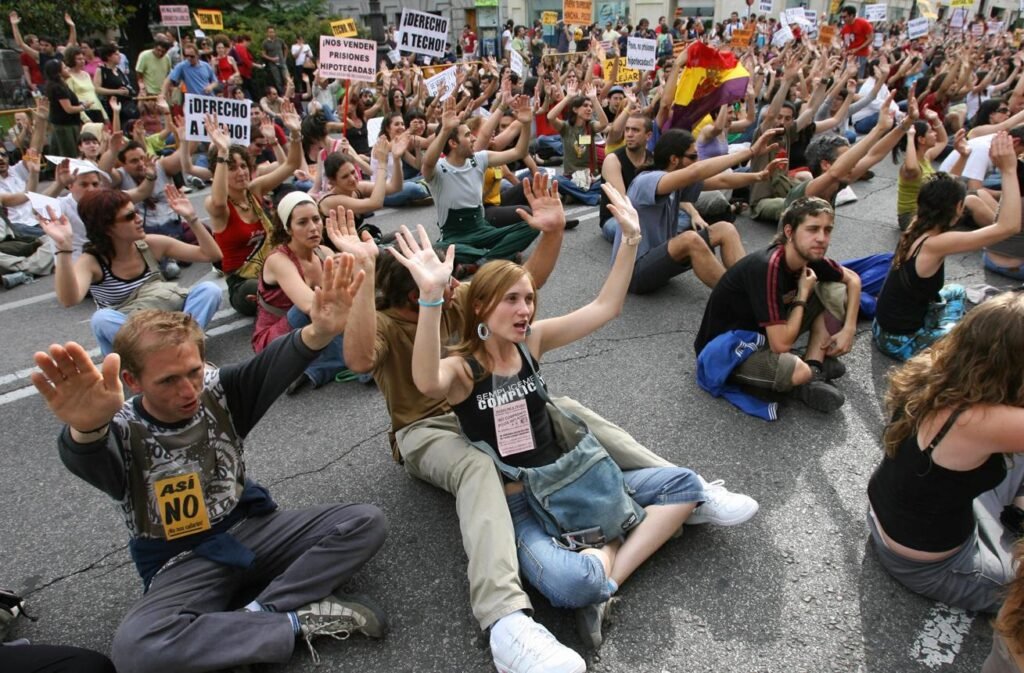
The Europe youth cost of living crisis has become an important backdrop to demonstrations about housing, education and economic security. Recent protests in France and Italy have highlighted different concerns, while wider European research confirms that housing affordability and financial insecurity are significant issues for many young people.
This article examines the evidence behind the crisis, how it affects daily life, why it can lead to protests and which policy responses could make a meaningful difference.
What Is Driving the Europe Youth Cost of Living Crisis?
There is no single cause. Housing affordability, income levels, education costs, insecure work and differences in access to family support can all affect a young person’s financial position.
Eurofound’s December 2025 research on youth housing found that younger adults are particularly exposed to housing pressures because they often have lower incomes, less secure employment and a greater need to find accommodation in cities where jobs and universities are concentrated. Read Eurofound’s research on the housing struggles of Europe’s youth.
Housing costs are limiting independence
Rent is one of the biggest barriers for young people who want to move out, attend university in another city or accept a job away from home. Even where employment is available, a high rent can absorb so much income that saving becomes difficult.
Eurostat’s data extracted in September 2026 found that the average age at which people in the EU left their parental home was 26.3 years in 2025. The average varied substantially between countries, from 21.3 years in Finland to 31.5 years in Croatia.
These figures do not mean that everyone who lives with their parents is doing so because of financial hardship. Family preferences, culture and personal circumstances also matter. However, housing affordability is one factor that can delay independent living.
Everyday expenses add to the pressure
Rent is only one part of a household budget. Food, transport, electricity, internet, healthcare expenses and education materials can leave little money for savings or unexpected costs.
When several expenses rise together, a person may have to cut back on non-essential spending, take extra shifts or depend on family assistance. Those options are not equally available to everyone.
For young adults already working on low or irregular incomes, even a relatively small unexpected bill can disrupt a carefully planned monthly budget.
What the Latest European Statistics Reveal
The Europe youth cost of living crisis is not merely a social-media talking point. Official statistics show measurable differences in housing conditions and financial security between young people and the population as a whole.
Eurostat reported that in 2025:
- 24.2% of people aged 15–29 in the EU were at risk of poverty or social exclusion.
- 26.9% of young people aged 15–29 lived in overcrowded households, compared with 16.8% of the overall population.
- 9.1% of young people aged 15–29 lived in households spending at least 40% of disposable income on housing, compared with 7.7% of the total population.
Sources: Eurostat — Young people and housing conditions and Eurostat — Youth deprivation statistics.
Why these numbers matter
Overcrowding can mean that people do not have enough space for their household size. Housing-cost overburden measures whether housing consumes at least 40% of disposable household income. The poverty-or-social-exclusion indicator captures a broader set of financial and social risks.
These measures describe different experiences, so they should not be added together as though they represent separate groups. Nor do they mean every young person in the EU faces the same problem.
They do show that a substantial number of young people experience housing conditions or financial circumstances that can make independence difficult.
Why Housing Has Become a Central Issue for Young People
Housing affects more than comfort. It influences access to education, employment, relationships and the ability to plan for the future.
Students face a double financial challenge
Students who move to a university city may have to pay rent and living expenses before they earn a full-time salary. Financial support, scholarships and part-time work can help, but their availability and value vary.
If affordable accommodation is unavailable, a student may choose a different university, commute from home, work longer hours or delay their studies. These decisions can affect educational opportunities and the time available for academic work.
Recent Italian student demonstrations have put this problem in the spotlight. Students have protested about high rents, limited affordable accommodation and the overall cost of attending university.
Young workers may struggle to save
Entering employment does not necessarily mean becoming financially secure. Early-career workers may earn less than experienced colleagues, face temporary contracts or need to live in expensive cities to access suitable jobs.
If rent and essential bills consume most of their take-home pay, building an emergency fund or saving towards a deposit becomes difficult. A person can be employed and still have limited financial resilience.
This is one reason housing pressures can persist even when a young adult has found work.
Insecure Employment and the Difficulty of Planning Ahead
The cost-of-living debate also involves the quality and stability of work available to young adults. Employment conditions differ across Europe, but temporary contracts, irregular hours and lower early-career earnings can make long-term planning harder.
Uncertain income makes housing harder to secure
Landlords may ask for proof of income, a deposit or a guarantor. Young workers with short contracts or irregular earnings may struggle to satisfy those requirements, even if they can usually pay rent.
Uncertain income also makes it harder to commit to a long tenancy, manage bills or qualify for credit. The result can be a cycle in which housing instability makes employment less convenient, while employment instability makes housing more difficult to obtain.
The difference between having a job and feeling secure
Employment is important, but it is not the only measure of financial wellbeing. Pay relative to living costs, working hours, job security and access to essential services all affect whether a person can support themselves.
For policymakers, the challenge is to consider whether work provides a realistic path towards independence, not only whether people are employed.

Education Costs and Unequal Opportunities
Education is often presented as a route to better employment and higher income. Yet the cost of studying can create barriers before those benefits are realised.
Students may need to cover tuition fees where applicable, accommodation, transport, course materials and everyday expenses. Some also support family members or work alongside their studies.
When opportunity depends on family resources
Students whose families can provide financial support may have more choices about where to study and whether to take unpaid placements or internships. Students without that support may need to prioritise immediate income.
This does not mean family assistance determines every outcome. Scholarships, public support and individual circumstances can make a difference. But unequal access to financial resources can affect how easily students take advantage of educational opportunities.
Why affordable student housing matters
Student accommodation can help people access universities without paying the full cost of private-market rents. However, the number of available rooms, their location, eligibility requirements and prices all affect whether the support reaches those who need it.
The European Parliament’s June 2026 overview on housing for students and young people in training identifies high housing costs, shortages and insecurity as significant barriers across EU countries. Read the European Parliament research briefing.
Why Economic Pressure Can Lead to Protests
Protests often emerge when people believe a problem is widespread, serious and unlikely to be resolved through ordinary channels. For young people, concerns about rent, education, wages and public services can become connected.
France: education conditions and public resources
Recent demonstrations in France have highlighted concerns about school staffing, classroom conditions, facilities and education funding. These protests have their own specific context and should not be reduced to housing costs alone.
However, they also reflect a broader concern about whether public institutions can meet the needs of younger generations.
Italy: student housing and the cost of university life
In Italy, student organisations have used tents and public demonstrations to draw attention to high rents and the availability of affordable university accommodation. Their demands focus on housing support, public investment and the practical cost of studying.
Different countries, different demands
Other European demonstrations may focus on wages, employment opportunities, transport, public spending or political accountability. Similar economic pressures do not make every protest part of one coordinated movement.
Understanding the Europe youth cost of living crisis requires examining the demands and circumstances of each country rather than assuming every demonstration has the same cause.
How the Housing Crisis Affects Mental and Social Wellbeing
Financial pressure can affect daily life beyond the bank balance. Constant uncertainty about rent, bills or future employment may create stress and make it harder to plan.
People may delay moving out, postpone relationships or family plans, share accommodation longer than they would prefer or turn down opportunities in other cities.
Housing quality matters too. A low-cost room that is overcrowded, poorly maintained or far from essential services can create its own difficulties.
These experiences are not universal, and financial hardship affects individuals differently. Still, stable and adequate housing can provide a foundation for studying, working and participating in community life.
What Governments Can Do to Help Young People
There is no single solution that works equally well in every region. The appropriate response depends on local housing supply, labour markets, public finances and the circumstances of different groups.
Increase the supply of genuinely affordable housing
Building more homes can help address shortages, but affordability and location matter. Policies may include public and social housing, student residences, renovation of unused properties and incentives to bring suitable homes into long-term rental markets.
New housing should be assessed by who can afford it, not simply by the number of units completed.
Improve targeted financial support
Housing allowances, scholarships and means-tested assistance can help people with limited resources. Support should be transparent, accessible and designed around real costs.
Short-term assistance may help people facing immediate pressure, while longer-term policy needs to address the underlying shortage of suitable homes.
Strengthen pathways into stable employment
Skills development, fair employment conditions and routes from education into work can help young people build financial security. However, employment measures are unlikely to solve housing affordability if wages remain far below local living costs.
Housing and employment policy therefore need to work together.
Listen to young people when designing policy
Young people experience housing, education and employment systems directly. Consultation with students, renters, workers and youth organisations can help policymakers identify barriers that statistics alone may not fully explain.
Listening is only a first step. Effective policy also requires clear targets, budgets, delivery dates and public reporting on outcomes.
Is Europe Responding to the Housing Crisis?
European institutions have begun placing greater emphasis on housing affordability. On 9 September 2026, the European Commission proposed an Affordable Housing Act intended to help Member States and local authorities address affordability and availability in areas under housing pressure. As of 22 October 2026, this is a proposal under consideration by the European Parliament and Council, not a fully adopted law. See the Council of the EU’s overview of the housing crisis and the proposal.
The Council also reported on 19 October 2026 that EU countries had pledged to strengthen efforts to prevent and address homelessness and housing exclusion.
These developments show that housing is receiving attention at European level. However, announcements and proposals do not automatically produce lower rents or more available homes. Implementation, national decisions, funding and local conditions will determine their practical effect.
How to Judge Whether Policies Are Working
Governments need to evaluate outcomes rather than rely solely on spending announcements or construction targets.
Useful measures include:
- The number of affordable homes and student rooms actually available.
- The share of household income spent on housing.
- Waiting times for public or subsidised accommodation.
- Youth poverty and housing-overcrowding rates.
- Access to stable employment and income.
- The number of people experiencing homelessness or housing insecurity.
- Whether support reaches low-income students and young workers.
Comparisons across countries should account for differences in wages, household structures, housing markets and data collection. A measure that works in one city may need adjustment elsewhere.
Conclusion: What the Europe Youth Cost of Living Crisis Means for the Future
The Europe youth cost of living crisis is about more than rising prices. It concerns whether young people can access adequate housing, pursue education, find secure work and build independent lives without financial pressure dominating every decision.
European statistics show that housing overcrowding, housing-cost burdens and poverty risks affect substantial numbers of young people. At the same time, the experiences of students and workers differ by country, city, household income and personal circumstances.
The protests in France and Italy have brought specific grievances into public view. Their demands are not identical, but they raise a shared question: are public services, housing markets and employment opportunities providing young people with a realistic path towards independence?
Addressing that question will require more than short-term announcements. Affordable housing, targeted financial assistance, stable employment and transparent public policy need to reinforce one another.
The long-term success of any response should be judged by whether young people gain greater security, more choices and a fairer opportunity to build their futures.
Explore DANK DISTRICT
Readers looking to explore the wider cannabis product landscape can browse DANK DISTRICT’s Cannabis Flower, Concentrates and Live Rosin categories.
The store also features Top Shelf and Connoisseur Shelf collections.
These are retail category links, separate from the article’s reporting on European housing, education and employment.
Why the Europe Youth Cost of Living Crisis Needs Attention
The Europe youth cost of living crisis continues to raise concerns about housing affordability, financial security and opportunities for young people. For many students and young workers, essential expenses consume so much of their income that saving for independent living becomes difficult.
A key part of the Europe youth cost of living crisis is the challenge of finding affordable accommodation. When rent takes up a large share of monthly earnings, young adults have less money available for food, transport, education and emergencies.
The Europe youth cost of living crisis can also influence career decisions. Some young people may accept jobs outside their preferred fields simply to cover their expenses, while others may postpone moving to cities with better employment opportunities because accommodation is too expensive.
Another concern linked to the Europe youth cost of living crisis is the pressure on families. When young adults cannot afford to move out, parents may continue supporting them for longer than expected, even when household budgets are already stretched.
Finding solutions to the Europe youth cost of living crisis means looking at housing policy, wages, education costs and access to stable employment together. No single measure can resolve every problem, but targeted action could help reduce the financial barriers facing young Europeans.
The Europe youth cost of living crisis should remain part of the wider discussion about Europe’s economic future. Giving young people a realistic opportunity to live independently can support social mobility, workforce participation and long-term economic stability.