
From Student Strike to National Protest: How France’s Demonstrations Expanded
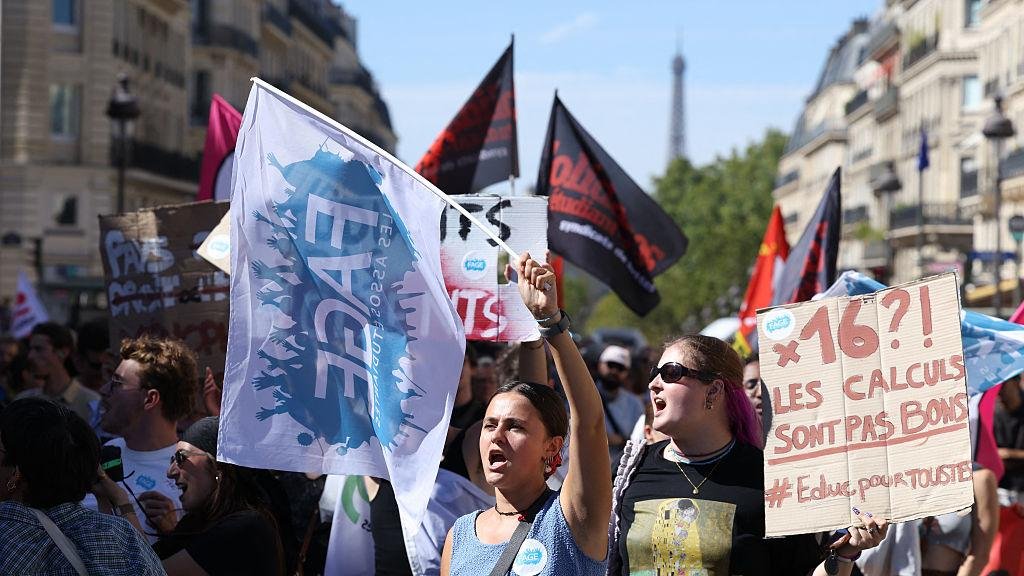
The France student protest movement has become one of the most closely watched demonstrations of public discontent in autumn 2026. What began with school blockades in the Paris region expanded into a wider wave of protests involving secondary-school pupils, university students, teachers, parents and other members of the public.
The demonstrations have drawn attention to concerns about school resources, teacher shortages, deteriorating facilities, education funding and the way young people are treated when they speak out. In some locations, protests remained peaceful; elsewhere, confrontations with police and property damage shifted attention towards public order.
According to reporting by Le Monde and Euronews in early October, the movement spread beyond the Paris suburbs into cities across France, with students demanding improvements to their educational environment and greater recognition of their concerns.
The France student protest movement is not simply a story about school blockades. It also reflects wider debates about public services, economic pressure, political representation and the future facing young people.
How the France Student Protest Movement Began
The movement gathered momentum in September 2026, when pupils at schools in the Paris region began protesting over conditions in their educational institutions. Demonstrations and blockades then spread to additional schools and cities.
Euronews reported that the initial actions included calls for more school resources, adequate staffing, better facilities and attention to problems affecting everyday learning. Social media helped footage and messages from local protests reach students elsewhere, encouraging wider participation.
As the demonstrations expanded, the France student protest movement attracted support from some teachers, parents, university students and other groups who shared concerns about public education.
It is important to distinguish the different participants. Secondary-school pupils, university students and education workers do not necessarily have identical demands, even when they appear at the same demonstration.
Why Students Took to the Streets
Teacher shortages and overcrowded classrooms
One of the central issues reported during the demonstrations was concern about staffing levels and classroom conditions. Students argued that missing teachers, overcrowded lessons and insufficient support can make it harder to learn effectively.
These complaints are not limited to one school or city. However, the scale and causes of staffing problems can differ between regions and institutions, so individual claims should be assessed against local evidence.
School buildings and learning facilities
Students also raised concerns about the condition of school buildings and the availability of suitable learning spaces. Problems with facilities can affect comfort, safety and the quality of lessons.
Calls for investment in classrooms, equipment and maintenance became part of the wider discussion about whether public education is receiving sufficient resources.
Anxiety about the future
For many young people, education is closely linked to their expectations of employment, financial security and social mobility. When students feel that their schools are under-resourced or that their concerns are being ignored, frustration can extend beyond the immediate classroom.
The France student protest movement therefore became a platform for broader concerns about whether young people have a fair opportunity to shape their futures.
How Local Blockades Became a National Issue
School blockades helped make the initial grievances visible. As more schools joined, media coverage increased and demonstrations spread into larger urban centres.
Le Monde reported that the protests had reached more than 1,000 schools by 1 October, according to reporting based on figures from the movement and authorities. The scale of disruption made education conditions a national political issue rather than a concern confined to a few local communities.
The expansion also brought different groups into the discussion. Teachers and parents could support calls for better resources while holding different views about the methods used by protesters.
This wider participation helped bring education policy, police responses and the right to demonstrate into the same national conversation.
The Role of Social Media and News Coverage
Social media can help student movements grow by allowing people to share videos, publish demands and coordinate local actions quickly. A demonstration that initially receives little attention can gain visibility when footage circulates widely.
News coverage also influences how a movement is understood. Reports about education funding and school conditions may help explain why students are protesting, while images of clashes, arrests or property damage can shift public attention towards violence and security.
Neither social media footage nor isolated incidents necessarily represent the experience of every protester. Understanding the France student protest movement requires considering its stated demands, the scale of participation and reliable reporting from multiple locations.
Peaceful Demonstrations, Clashes and Police Response
Most importantly, a protest movement should not be treated as a single uniform event. Demonstrations can include peaceful marches, school entrances blocked by protesters, confrontations and unlawful acts, sometimes in different places on the same day.
Euronews reported incidents involving clashes and damage during the early October demonstrations. Le Monde also examined questions about police interventions and the treatment of young demonstrators.
These incidents created a difficult debate. Authorities have a responsibility to protect public safety and respond to violence, while protesters retain rights to peaceful assembly and expression under applicable law.
It is equally important not to attribute the actions of a small group to every student who participated. Peaceful demonstrators, people accused of offences and those affected by police action should be discussed accurately and separately.
How the Government Responded
The protests placed pressure on French political leaders to respond to concerns about education and public order. Government representatives publicly criticised violence and discussed the political forces they believed were influencing the movement.
At the same time, student groups and supporters continued to call for action on school resources and learning conditions.
A major question is whether the protests will lead to specific commitments on staffing, school investment and student representation. Public statements or meetings do not automatically mean that a policy has changed. Any claimed agreement should be checked against official announcements and subsequent implementation.
As of 22 October 2026, the reporting cited here describes an ongoing and politically contested situation rather than a single final settlement of the movement’s demands.

Are France’s Demonstrations Connected to Protests Elsewhere in Europe?
France has been an important reference point for other demonstrations, but protests in different countries are not necessarily part of one coordinated campaign.
Reporting published on 20–22 October described protests and social unrest in Italy, Belgium, Spain and Greece. The issues varied: some demonstrations focused on education and austerity, others on housing affordability, energy costs or wider dissatisfaction with government policy.
In Greece, for example, demonstrations on 21 October focused on the cost of living, student housing and public education. In Spain, housing affordability has been a prominent issue, while protests in Italy have included concerns about school conditions and rising costs.
These examples suggest that young people in different countries may share frustrations about affordability, education and their prospects. However, each country’s movement has its own political context, organisers and demands.
What Happens Next?
The future of the France student protest movement will depend on several factors: whether student groups maintain participation, whether school and university communities continue to support the demands, and whether the government announces credible measures.
Progress should be measured through concrete developments rather than promises alone. Relevant indicators include published education budgets, staffing decisions, school renovation programmes, formal negotiations and evidence that agreed changes have been implemented.
The movement also raises a longer-term question about how young people can influence public policy. Student representation, consultation and transparent decision-making may help institutions respond to concerns before frustration develops into wider confrontation.
Conclusion
The France student protest movement expanded from local school actions into a national debate about education, public services and young people’s futures. Teacher shortages, classroom conditions, school facilities and the response to demonstrations all became part of the discussion.
Although the protests have included serious incidents in some locations, it would be misleading to treat every participant or demonstration as violent. The movement includes different groups, concerns and approaches.
The lasting significance of these demonstrations will depend on what happens next: whether the issues raised receive serious consideration, whether public authorities respond proportionately and whether concrete improvements follow.
For students and young workers across Europe, the central question remains whether their concerns can lead to meaningful change in the institutions that shape their lives.
Explore More at DANK DISTRICT
Explore more DANK DISTRICT category pages:
Editorial note: These are store-category links rather than sources about French protests. For topical relevance, prioritise links to related DANK DISTRICT news articles as your content library grows.
What started the France student protest movement?
The movement gained momentum in September 2026 through school demonstrations in the Paris region. Reported concerns included teacher shortages, school resources, classroom conditions and deteriorating facilities.
Why did the demonstrations spread across France?
Local actions gained visibility through media coverage and social media. As more schools and cities joined, education conditions became a wider national issue.
Were all the protests violent?
No. Reporting described peaceful demonstrations as well as clashes and property damage in some locations. Individual incidents should not be used to characterise every participant.
Did university students participate?
Yes. Reporting in early October described university students joining or supporting some demonstrations, although secondary-school pupils were central to the initial movement.
Did the French government agree to all the students’ demands?
The cited reporting does not establish a final settlement covering all demands. Specific policy changes should be confirmed through official announcements and evidence of implementation.
Are the French protests connected to protests in other European countries?
Some movements have drawn inspiration from events in France, but protests elsewhere have different organisers and local demands. Shared concerns do not prove that all demonstrations belong to one coordinated movement.
Le Monde — High school protests spread across France, 29 September 2026:
https://www.lemonde.fr/en/france/article/2026/09/29/high-school-protests-spread-across-france-pitting-radical-left-against-government_6758067_7.html
Le Monde — High school student protests spread across France as tensions escalate, 2 October 2026:
https://www.lemonde.fr/en/france/article/2026/10/02/high-school-student-protests-spread-across-france-as-tensions-escalate_6758168_7.html
Euronews — What is driving student protests in France?, 5 October 2026:
https://www.euronews.com/2026/10/05/from-school-blockades-to-violence-what-is-driving-student-protests-in-france
Le Monde — French high school students’ movement grows and draws widespread support, 7 October 2026:
https://www.lemonde.fr/en/france/article/2026/10/07/high-school-students-movement-protests-grow-and-draw-widespread-support_6758337_7.html
The Irish Times — Europe’s angry autumn: what’s driving the wave of protests?, 21 October 2026:
https://www.irishtimes.com/world/europe/2026/10/21/europes-angry-autumn-whats-driving-the-wave-of-protests/
Le Monde — Social unrest spreads across Europe amid soaring energy prices and a housing crisis, 20 October 2026:
https://www.lemonde.fr/en/international/article/2026/10/20/italy-spain-belgium-portugal-social-unrest-spreads-across-europe-amid-soaring-energy-prices-and-a-housing-crisis_6759435_4.html
The Future of the France Student Protest Movement
The France student protest movement has highlighted growing concerns about education quality, school resources and young people’s future opportunities. Its long-term impact will depend on whether these concerns lead to meaningful discussions and practical changes.
One important challenge for the France student protest movement is maintaining public attention after demonstrations end. Students want decision-makers to recognise their concerns, but lasting improvements require clear commitments, funding and effective implementation.
The France student protest movement has also raised questions about how students can participate in decisions affecting their education. Better communication between schools, students, teachers and government representatives could help address problems before they escalate.
Another important issue for the France student protest movement is public support. Peaceful demonstrations can help communities understand students’ demands, while incidents of violence can distract from the issues protesters want to discuss.
The France student protest movement may also influence conversations about education in other European countries. Students elsewhere face different circumstances, but concerns about resources, affordability and future employment can create common ground.
Ultimately, the France student protest movement will be judged not only by the size of its demonstrations but also by what changes afterward. Improvements in school conditions, staffing and student representation would provide clearer evidence of lasting progress.