
Italy October 2026 Protests: What Students and Workers Are Demanding
Italy October 2026 protests have brought students, workers and other demonstrators into the streets over education funding, rising living costs, insecure employment and the future facing young people. Demonstrations on 16 October included school pupils demanding more money for education and less spending on arms, with protests reported in Turin, Rome, Genoa, Venice, Padua and Treviso.
The demonstrations are part of a wider period of unrest across Europe, but Italy’s movement has its own political and economic context. Some actions have focused on schools and universities, while other protests have involved workers concerned about wages, fuel prices and the cost of living.
Recent reporting also describes clashes and looting in some places. These incidents should be distinguished from peaceful demonstrations and the demands of student groups. Understanding Italy October 2026 protests means looking at both the economic pressures behind the demonstrations and the different ways people have responded to them.
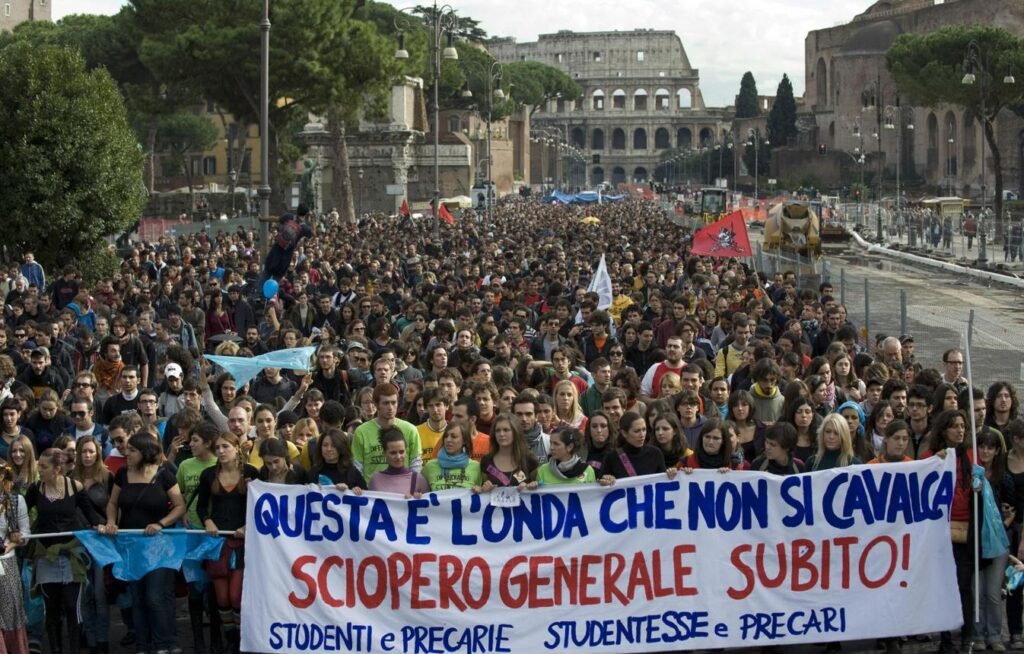
Why Italy October 2026 Protests Are Growing
The Italy October 2026 protests reflect several overlapping concerns. Students are calling for better school conditions and increased education funding, while workers and families are worried about purchasing power, employment security and rising essential expenses.
These concerns have developed against a difficult economic backdrop. Higher energy and fuel costs can put pressure on household budgets and business operating expenses. When wages do not keep pace with essential costs, people can feel that working or studying hard is no longer enough to guarantee financial stability.
The demonstrations are not one perfectly organised movement with a single leader or identical demands. Different unions, student organisations and independent groups have participated for their own reasons.
1. Students Want More Funding for Schools
Education funding has been one of the clearest demands of the student demonstrations.
On 16 October, students took part in protests under the banner of “No Meloni Day”. Reporting by ANSA described demonstrations in several Italian cities, with protesters demanding greater investment in schools and arguing that public resources should prioritise education rather than military spending.
Students have also raised concerns about school buildings, classroom conditions, learning materials and the quality of educational support. For pupils attending institutions with inadequate facilities, these are practical issues that affect their daily lives.
Italy October 2026 protests have therefore placed education spending at the centre of a wider argument about national priorities. Demonstrators want public investment to improve the conditions in which young people learn and prepare for employment.
2. Teachers and Education Workers Want Better Conditions
Students are not the only people raising concerns about education. Teachers and other education workers have also called for improved pay, staffing and working conditions.
Schools need enough qualified staff to deliver lessons consistently. When vacancies remain unfilled or workloads become excessive, students and teachers can both experience the consequences.
Education workers may also have concerns about career progression, salaries and the long-term attractiveness of teaching as a profession. These issues can be particularly difficult to resolve when public budgets are under pressure.
The Italy October 2026 protests have brought some of these connected concerns into the same public debate. Students want better learning conditions, while education workers want the resources and working environment needed to provide them.
3. Workers Are Worried About Wages and Purchasing Power
The cost of living is another important factor behind the demonstrations. Workers may see household expenses rising while their real purchasing power remains under pressure.
Fuel, energy, food, transport and housing costs all influence how far a salary can stretch. When essential expenses increase faster than earnings, families have less money available for savings, education, healthcare and unexpected bills.
Italy has also faced long-running concerns about weak wage growth and productivity. Reporting by AFP and The Local in October 2026 highlighted the pressure on real wages and the effect of renewed inflation, including rising fuel prices.
For workers, the central issue is whether employment can provide a reasonable standard of living. Italy October 2026 protests have helped bring that question back into the national conversation.
4. Students Are Struggling With the Cost of Living and Housing
The cost of studying goes beyond tuition or school supplies. Students may also need to pay for accommodation, transport, food, textbooks and other essential expenses.
In cities with expensive rental markets, finding a room near a university can be a major challenge. Students without family financial support may have to work longer hours, travel further or reconsider their educational options.
University students have staged protests and encampments over the cost of studying and accommodation. These actions reflect a wider concern that access to education should not depend entirely on a person’s family resources.
The Italy October 2026 protests connect these housing concerns with the broader debate about equal opportunity. Students are asking whether education can genuinely offer a path to a better future when the cost of participating is itself becoming difficult to afford.
5. Why Some Protesters Oppose Higher Military Spending
One slogan reported during the student demonstrations was “Money for schools, not for war.” It expresses a disagreement about how government resources should be allocated.
Protesters argue that schools, universities and public services need more funding. Some believe that military expenditure should not take priority over everyday social needs.
Supporters of higher defence spending may argue that security commitments require investment and that governments must balance multiple responsibilities. The debate therefore involves questions about national security, public finances and social priorities.
The demonstrations have made this disagreement visible, but a protest slogan alone does not establish the exact budgetary choices available to the government. Assessing the issue requires examining official spending plans and the trade-offs they involve.
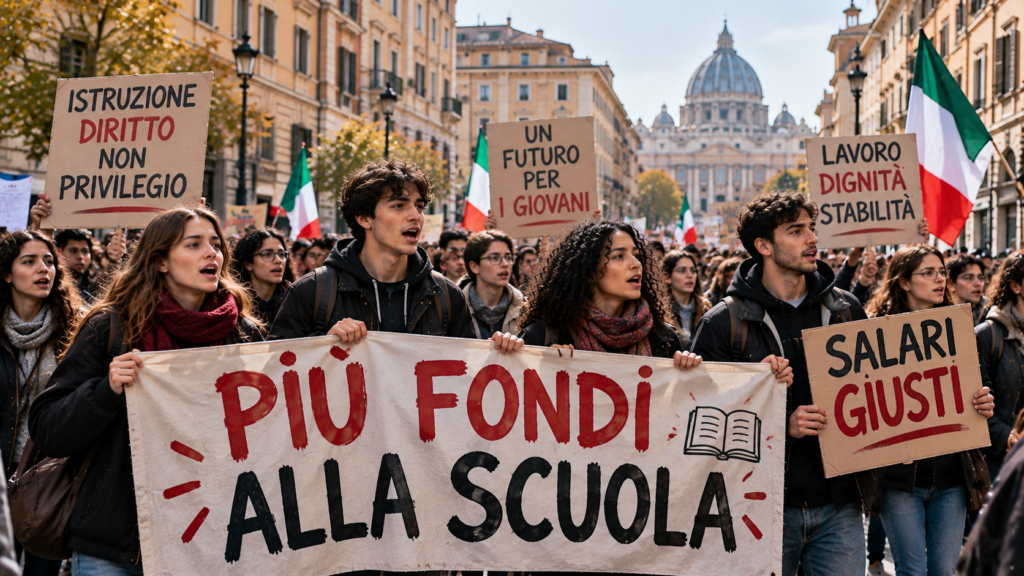
6. What Happened in Turin, Rome and Other Cities?
Reports from 16 October described student demonstrations in Turin, Rome, Genoa, Venice, Padua and Treviso.
In Turin, ANSA reported that some demonstrators threw rocks and eggs at police during a protest. Other reports described rallies outside government buildings and school occupations in several cities.
The scale and character of demonstrations differed from place to place. Some actions focused on student demands and education funding; other incidents involved confrontation with police.
It is important not to describe every participant as violent because of the actions of a smaller group. Equally, reports of clashes or damage should not be ignored when assessing the public consequences of demonstrations.
The Italy October 2026 protests include multiple forms of activism, from organised marches and union actions to school occupations and isolated incidents of disorder.
7. How the Government Is Being Challenged
The demonstrations create pressure for the Italian government to respond to concerns about education, wages, economic security and public spending.
Students want their institutions to receive adequate resources. Workers want stronger purchasing power and better conditions. Families want essential costs to remain manageable.
These demands are not identical, and meeting them can involve difficult policy choices. Governments must consider public finances, economic growth, taxation, employment and the competing needs of public services.
The important question is whether the protests lead to specific commitments and measurable changes. Statements of concern are not the same as funded reforms, and proposed measures should not be treated as completed policies.
8. Are Italy’s Protests Connected to France and Spain?
The demonstrations in Italy have been reported alongside wider youth-led protests and social unrest elsewhere in Europe.
France has seen school protests expand into a broader political debate about education conditions and the cost of living. Spain has experienced demonstrations over housing affordability, while other countries have seen protests over wages, public services or education.
Some Italian student initiatives have explicitly drawn inspiration from events elsewhere. However, shared concerns do not mean that all the protests have the same organisers, objectives or political affiliations.
Italy October 2026 protests are best understood within Italy’s own social and economic circumstances, while recognising that housing costs, financial insecurity and concerns about the future are affecting young people in several European countries.
9. What Could Happen Next?
The future of the demonstrations will depend on whether student groups, unions and other organisations maintain their participation and whether the government responds with concrete measures.
Several developments will be worth watching:
- Whether additional student demonstrations and school occupations take place.
- Whether unions announce further strikes or coordinated action.
- Whether the government commits funding to schools and universities.
- Whether wage and cost-of-living measures are introduced or expanded.
- Whether housing affordability becomes a more prominent part of student demands.
- Whether negotiations lead to measurable improvements in working and learning conditions.
These are indicators to monitor, not predictions that any specific outcome is guaranteed.
Conclusion: What Italy October 2026 Protests Tell Us
Italy October 2026 protests have highlighted concerns about education funding, housing affordability, wages and the cost of living. Students want better conditions in schools and universities, while workers and families are concerned about whether their income can cover essential expenses.
The demonstrations also reveal disagreements over public spending and national priorities. Some actions have remained focused on policy demands, while incidents of violence and looting have raised separate questions about public safety.
Ultimately, the significance of Italy October 2026 protests will depend on what happens after the demonstrations. Clear policy commitments, adequate funding and evidence of implementation will matter more than slogans alone.
For students and workers, the central question remains whether political attention can translate into a more affordable, secure and promising future.
Explore More at DANK DISTRICT
Explore these DANK DISTRICT category pages:
Editorial note: These are store-category links rather than sources about Italian protests. For stronger topical relevance, prioritise internal links to related news articles on your site as you publish them.
Why are students protesting in Italy in October 2026?
Students have protested over education funding, school conditions, the cost of studying and concerns about how public spending is prioritised.
What was No Meloni Day?
It was a student protest initiative held on 16 October 2026, with demonstrations in several Italian cities against government policies and in favour of increased education funding.
Sources and Further Reading
For more information about Italy October 2026 protests, education funding and the demands of students and workers, consult these independent news reports:
- ANSA — Students throw rocks, eggs at cops in Turin amid anti-government protests across Italy
- The Local — Italy braces for an autumn of discontent as students protest
- The Guardian — Why are people protesting across Europe?
- Al Jazeera — Thousands march for school funding in Greece
Are Italian workers participating in the protests?
Yes. The wider period of unrest includes workers and trade unions raising concerns about wages, working conditions, fuel prices and the cost of living. Not every demonstration has the same organisers or demands.
Have all the protests been violent?
No. Reports describe organised marches and other demonstrations as well as clashes and property damage in some locations. Individual incidents should not be used to characterise every participant.
Are the protests linked to demonstrations in France?
Some Italian student actions have drawn inspiration from protests in France and Spain. However, the movements have their own local demands and political contexts.
What happens next?
Further demonstrations, union activity and government responses may shape the movement. Specific policy outcomes should be confirmed through reliable reporting and official announcements.